ROME DAY 25/01 01: Home at last

Today in Rome the sun rose at 0727 and it set at 1719 and the Ave Maria Bell was to ring at1730.

It is the Feast of the Conversion of St. Paul.  I’m and convert, and I converted in St. Paul.

I also have a 1st class relic of St. Paul… not with me, however.

WELCOME REGISTRANT:

Cici

It has been a productive day.

The Great Roman™ found me at the airport and gave me a lift, bless him.   Then we went to do internet installation things.  That’s my one task on this trip.  Anything else is gravy.

Internet installation seems easy to do.  BUT… this is Rome and you never know.

You can see how dark the dome of San Pietro is becoming.  Can’t they outsource this?  Surely someone will foot the bill since the Holy See has self-destructed financially.

We parked near the Ponte Sisto, which is destined to by a significant signpost in my life.

First, the very first time I was in Rome I stayed in the street leading into it, which runs by The Parish™.   Then I walked across it for my first meal in Rome in that year, early 80s.  I wasn’t Catholic yet.  Now it is in the middle of where I have been for years.  Also, I remember Fr. Foster torture a Harvard Latin prof with the inscription by the bridge.  That memory is every green.

After some time in the Vodafone store getting internet sorted, we had to regain our strength.

Pizza bianca and mortadella with black truffle.

Which panino is mine?  (Okay, this one might not be very hard.)

It’s a short trip and a trial run, a learning venture.  I see there are still quite a few things to get, but the MAIN thing is getting internet.

QUAERITUR: Should I get a toaster oven?  There’s no microwave.  No toaster either.

In chessy news… I understand Tata Steel is getting spicy.  I, however, am busy.

That said, for part of the flight I used the inseat games and played chess against the Thing, at the highest level.  Even experimenting, I cleaned its clock.  I had a memory that it was harder.  Am I getting better?

Black to move and mate in 4.  Look at those scary bishops… and not for the usual churchy reason.

[NB: I’ll hold comments with solutions ’till the next day so there won’t be “spoilers” for others.]

Please remember me when shopping online and use my affiliate links.  US HERE – UK HERE  WHY?  This helps to pay for health insurance (massively hiked for this new year of surprises), utilities, groceries, etc..  At no extra cost, you provide help for which I am grateful.

Posted in SESSIUNCULA | Comments Off on ROME DAY 25/01 01: Home at last

My View For Awhile: Eastward

The sunset in Rome was at 1717.  The sunset where I am now is…right now!  (See below)

The Ave Maria Bell doesn’t ring here either, but in Rome it ought to ring at 1730.

Tomorrow, when I arrive in Rome, the sun should be up already.  I’ll report on that later.

Airport.   The way into JFK was congested because of construction, but the traffic wasn’t horrible.  The dopey Uber driver had to be told several times where to go and, even then, almost didn’t take the right terminal exit.

Check in and security… ZOOM.  Not like last time.   I practically walked through.  Very few people.    Lounge, rather empty now.  However, there is a fellow from the Asian subcontinent shouting into his own zoom as if this place were his private living room.

I board in about 30 minutes.  Time to add the international stuff to my US phone, close the laptop, fill my water bottle, and wrap up here.

Since I switched to T-Mobile from ATT and halved by domestic bill, I think I might have free wifi inflight.   I’ll report on how T-Mobile works in Rome.   ATT worked well but… whew… the regular monthly bill was horrible.

UPDATE:

Boarding went FAST and I have an empty seat next to me. It is really breezy in the cabin. It’s strong enough to move people’s hair. Lots of people trying to close already closed air vents. I hope this is just a preflight issue or we will we wind chapped. I’m writing with one eye closed. Soon I’ll need a blanket.

We’ve been told that our flight will be over an hour early. I think that the storm Éowyn has something to do with that: tail winds.

Posted in On the road, SESSIUNCULA, What Fr. Z is up to | Comments Off on My View For Awhile: Eastward

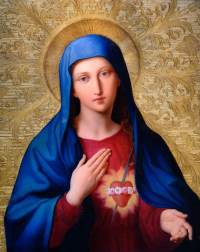
A chess analogy for the importance of Mary

This is not all that sophisticated, as in knowing all the lines to 10 moves of the QGD, but it is apt these days for this blog. At Aletheia

How chess explains the vital role of the Virgin Mary

The writer might not be a chess player, given the mix up of terminology.  The queen, on the board, is a piece, not a player, though the queen plays a major role (until it doesn’t).

Anyway, it’s short.

Posted in SESSIUNCULA | 1 Comment

ROME DAY 25/01 -01: Cheeseburger

In Queens… really good cheeseburger. I usually have one of these when I come back from Italy. Why wait?

Bun: buttered and grilled, as God intended.   Salad instead of starches, although my dining companion shared an some of his onion rings.  Cheese: pepper jack.  Salad dressing: Balsamic vinaigrette.

Life doesn’t have to be complicated all the time.

This is something uncomplicated too… not as good as a cheeseburger photo, but something you should know about.

I’m all for saving the environment, aren’t you?

This is too cool not to post. Elon announced that soon we will have mobile/cellphone to Starlink satellite service. HERE We live in amazing times.

Please remember me when shopping online and use my affiliate links.  US HERE – UK HERE  WHY?  This helps to pay for health insurance (massively hiked for this new year of surprises), utilities, groceries, etc..  At no extra cost, you provide help for which I am grateful.

If only…

In chessy news… Tata Steel Chess Tournament is taking place from 18 January until 2 February in Wijk aan Zee, but – to your great disappointment, I’m too busy to write about it because I have an international flight in a few hours and I have stuff to do, like find a work-around for the portable monitor delivered today: it doesn’t work with any port but USB C which is my power-IN port! See the problem? This laptop always struggles in Rome with cooling, etc., and I think it may be it’s last trip so that I can dedicate it to the live daily Mass stream from the Chapel of the Two Trinities.

Time yourself.

Black to move and mate in 2.   Can you get it in under 30 sec?   (Me? 2)

[NB: I’ll hold comments with solutions ’till the next day so there won’t be “spoilers” for others.]


Posted in SESSIUNCULA | 5 Comments

23 January: St. Raymond Peñafort – surfer extraordinaire

Today is the feast of St. Raymond of Peñafort (+1275).

What you see below might leave you slightly puzzled.

The painting is in the Spanish church in Rome, Santa Maria in Monserrato.

Here is another view.

This is St. Raymond Penafort (+1275), whose tomb you visit in Barcelona.  He was a great canonist and is patron of canon lawyers.  With St. Peter Nolasco he founded the Mercedarians.

St. Raymond had gone to Majora (lower left corner of the higher painting and the left side on the lower) to convert the Moors.  As it happened King James I of Aragon was hanging out there with his mistress.  Channeling his inner John the Baptist, St. Raymond demanded that King send her away.  The King refused and Raymond said that he would return to Barcelona.  However, the King blocked Raymond’s departure, forbidding any boat to bear him away.   In the presence of a Dominican as a witness, Raymond went to the shore, took off his clock and put the end over his staff as a sail, stepped on to the trailing part and zoomed off 160 miles to Barcelona.  The King was impressed, it seems, and mended his ways.

St. Raymond pray for us and for politicians who support and are involved in intrinsically evil things that cause public scandal.

Posted in Saints: Stories & Symbols | 4 Comments

ROME DAY 25/01 -02: Chinese Food (Sichuan)

Where I am the sun rose at 7:12 and it will set at 17:02.

If you were in Rome, after seeing the sunrise at 7:28 you could venerate the relics of St. Emerentiana at the Basilica of St. Agnes on the Via Nomentana and then later observe the sunset at 17:16 to be followed by the Ave Maria Bell, theoretically at 17:30.

WELCOME REGISTRANT:

jp60

HEY ri****nd@att.net – My note to you was kicked back.  NEW EMAIL?

Last night priest friends and I went to a favored Chinese place for supper.   We started with xiao long bao (not shown) and moved on to other delights.

This was the cumin lamb.

I had to move fast because one our gang practically lunged at the food as it came out of the kitchen.

Shrimp in mayonnaise with walnuts and pineapple.  For those of you in Columbia Heights, yes, that’s broccoli.

Eggplant in garlic sauce.

Dry Pepper Chicken. Quite spicy.

Mixed Vegetables.

Another thing not shown here is the Beef in Hot Sauce. I know I took a photo, but this morning it isn’t in the album. Strange. It was a medium-sized bowl with a stew of beef, garlic, Chinese cabbage and lots of hot peppers with a touch of peppercorns. At this point even our lunging companion had to slow down. Good conversation. Good food. Hard to beat. It’s a pretty simple place. Nothing fancy about it at all, kind of a long marrow hole in the wall, but nice people and good food. We keep going back. I’ve slowly but surely been working out way through the menu, but something are absolutely necessary, like xiao long bao. They are not the best I’ve had, but they are pretty good. But they need bigger spoons! (Note to self. Bring spoon.)

In churchy news, I already posted about the great article on the Catholic teaching concerning “deportation”. HERE

After Chinese, when there was perhaps a little cigar smoke wafting, I saw a video for the first time of the decidedly stupid speech given by the bishopette aimed at 47 and colleagues. The reactions in the pews were great and quite restrained given the obvious insult. However, I saw this interesting tweet. HERE As we saw, Sen. Amy Klobuchar (D-MN) was in charge of the inaugural doings. As it turns out, that “bishopette” was in Minneapolis for a while, which was ground zero for women’s ordination in the Episcopal Church. So, Amy got her dig in, and used her position for a personal jab. But, hey, I grew up in Minneapolis where the Klobuchar name was familiar. Her father was a long time newspaper columnist, which is surely how she made her way: name recognition (not rare).

Please remember me when shopping online and use my affiliate links.  US HERE – UK HERE  WHY?  This helps to pay for health insurance (massively hiked for this new year of surprises), utilities, groceries, etc..  At no extra cost, you provide help for which I am grateful.

In chessy news…. nah.

White to move and win. Win, not mate. There’s a move that wraps it up.

[NB: I’ll hold comments with solutions ’till the next day so there won’t be “spoilers” for others.]


Posted in SESSIUNCULA | 4 Comments

What is Catholic teaching about “deportation”? Maybe not what some higher-ups think.

At Catholic Vote there is an article (seemingly assembled from tweets/x) which you should look at about Catholic teaching on “deportation”.

PROBLEM: Official Church documents on faith and morals have perennially been written in LATIN.  That fact is not the PROBLEM to which I referred.  The PROBLEM is that, at least in these USA, not many of our clergy – particularly in the upper ranks – can read Latin.   This is one reason why the fear and repress sacred liturgical worship in Latin: bishops don’t want to see not to know what is going on, which is a problem that is driven into their heads by the structure of the Novus Ordo, because the Novus Ordo tends to be celebrant animated rather than rubric driven.  I digress.

So we can rightly ask, What Does The Church Really Teach about “deportation”.

Here is an idea or two for our bishops to mull over before making sweeping statements in which the word “deportation” might appear.

The smooth text from Catholic Vote (my emphases and comments)

In a series of posts on X (formerly Twitter) Tuesday, Catholic priest Father Peter Totleben, O.P., explained the Catholic Church’s nuanced teaching on “deportation.”

The definition of the “deportation” explicitly opposed in certain Catholic texts “does not apply to deportation in the colloquial sense that Americans use the term,” Father Totleben wrote.

The Dominican friar wrote that when recent Church documents use the Latin word “deportatio” – usually translated to English as “deportation” – they are not referring to simply repatriating migrants to their country of origin.

He specifically named the 1965 pastoral constitution Gaudium et spes and Pope St. John Paul II’s 1993 encyclical Veritatis splendor [GS 27 HERE – notice in that paragraph there is a kind of hierarchy of evils perpetrated against human dignity starting with murder of the innocent and suicide which come before the issues stressed by the “seamless garment” crowd.  VS quotes GS 27.   But VS isn’t very popular right now in some circles.]

“According to the dictionary (and its references to Roman Law), ‘deportatio’ is displacing people from their native land,” the priest explained. “So, in condemning ‘deportatio,’ the Magisterium is thinking of things like the displacement of the Jews, or various displacements that occurred in Europe right after World War II, or things like ethnic cleansing.” [Armenians… Tutsi….  Ethnic cleansing is a serious matter.  One could suggest, however, that a pogrom is being carried out within the Church against certain undesirable elements.]

“This should be obvious,” the Dominican stressed. “The Church teaches both that people have a right to migrate both for asylum and economic reasons.”

However, he emphasized that the Church also teaches “that the welcoming country has the right to regulate immigration for economic and cultural reasons,” which “obviously entails a right to repatriate.”

“And it should be pretty clear that if border authorities apprehend someone in the very act of illegally crossing the border, they are allowed to send the person back across the border, they don’t necessarily have to give him residency,” Father Totelben continued, summarizing the common 21st-century American definition of “deportation.”

The priest added it should “be clear that ‘sending a person back to his home country who has no legal right to be in the present country’ and ‘exiling a person from his native land’ are two different species of moral action.”

“Also, notice how no Church authority when speaking out in favor of immigrants has ever said that no immigrant may ever be sent back to his home country, because it is intrinsically evil to do this,” Father Totelben highlighted.

“As always, you have to find out what the people who formulated the Church teaching meant by a term,” the priest wrote. “You can’t apply your own definitions to Church teaching.”  [So you have to read… be able to read the LATIN.]

Moreover, he cautioned that not all deportation policies are justified by Church teachings: “Just because deportations, understood as repatriations, are not intrinsically immoral does not mean that a particular plan for mass deportations meets the demands of justice or prudence.” [A balanced explanation.]

To resolve that question,” he wrote, “you would have to weigh a variety of factors” including “the evil of family breakup, the potential injustice of any procedures used to effect the deportation,” as well as “the effect on the economy.”

“And the weighing of these goods and evils are matters that Catholics can in good faith disagree on, and still be good Catholics who are following Catholic social teaching,” he wrote.

Contingent moral problems often have different solutions about which we can disagree.

Fr. Z kudos to Father Peter Totleben, O.P.

Posted in "How To..." - Practical Notes, The Coming Storm, The Drill, The future and our choices | Tagged , | 8 Comments

Daily Rome Shot 1227 – My View For Awhile – North!

In Rome, sunrise was at 07:29 and sunset is at 17:15.   The Ave Maria Bell ought to ring at 17:30.

It is the Feast of St. Vincent Pallotti, who is the saintly neighbor of The Parish™ on the Via dei Pettinari.

In the traditional calendar we observe Sts. Vincent and Anastasius, which  Roman church is in front of the Trevi Fountain.   This is the church in which the innards of dozens of Popes are entombed.  Yes, innards.

I’ve been watch quite a few of the videos and clips of the inaugural events.  I happened to catch the new SecState arrive at Foggy Bottom and give a speech to his workers.   I am pretty sure that Marco Rubio is a Vulcan.

I am at the airport for my first leg to Brooklyn. Thence, to Roma. The airport is chaos due to many delayed flights. My flight is delayed as well but – so far – not too long. And I don’t have a connection.

I’ve thought for a while. I can’t think of anything I’ve heard Card. Sarah say with which I disagree.

I read on X a suggestions that the Gulf should be renamed the Gulf of Our Lady of Guadalupe. I like it. It might be too late. HERE

I missed the whole thing with the “bishopette” but I saw 47’s tweet. I guess that’s a “no” vote. HERE

Meanwhile…

In chessy news… I don’t have much to say other than

Black to move and mate in 3.

[NB: I’ll hold comments with solutions ’till the next day so there won’t be “spoilers” for others.]

Oh yes, FIDE has their panties in a twist over the rise of a Fisher Random – aka “Freestyle” – Chess “World” Championship.   It was bound to happen.

UPDATE

I really like that message “Bag on plane”… and it’s the correct plane.

Posted in SESSIUNCULA | Comments Off on Daily Rome Shot 1227 – My View For Awhile – North!

Daily Rome Shot 1226 – “Baaaaaah!”

Happy Feast Day!

Images from The Great Roman™.

Please remember me when shopping online and use my affiliate links.  US HERE – UK HERE  WHY?  This helps to pay for health insurance (massively hiked for this new year of surprises), utilities, groceries, etc..  At no extra cost, you provide help for which I am grateful.

In chessy news… HERE

Black to move and mate in 4.

3:16 isn’t just in John.

This is great… I thought it was just trolling!

Posted in SESSIUNCULA | 10 Comments

21 January – “O glorious St. Agnes, intercede with Christ the High Priest for a return of orthodoxy, sanity and sanctity to the Roman Church!”

The Church, especially the Church in Rome, is in an objectively dreadful state.

For the sake of the Roman Church, let us today invoke St. Agnes, virgin and martyr.

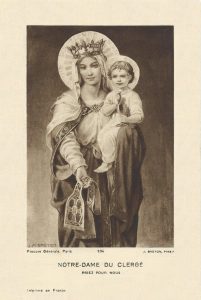
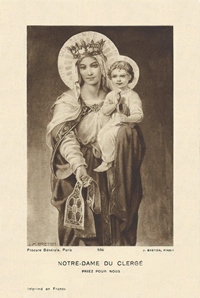
O glorious Agnes who, though weak, was chosen by God to make His own might manifest in your martyrdom, together with the Peter and Paul and the other Roman martyrs and confessors, intercede now before the throne of our Christ the High Priest in heaven and beg a return of orthodoxy, sanity and sanctity to the Church especially in Rome and in particular the Roman Curia at every level.  O holy Agnes, who bravely suffered torments, ask Mary, the Queen of the Clergy, to protect and aid all priests, so that they will all stand up boldly and teach the truth about the Sacrament of Matrimony, the integrity of the Sacrament of Holy Orders, the truth about the Most Holy Eucharist, and beg for the restoration and renewal of our sacred liturgical worship of the Lamb who was slain.  We entrust this to you, blessed Saint Agnes, with all our confidence.  Amen.

I have posted the following in times past, but it bears repetition. Newcomers to this blog may not have seen it.

Behold the skull of Agnes, in situ, in her beautiful church in Rome on the Piazza Navona.

The dies natalis (“birthday into heaven”) of Agnes was recorded in the register of the depositio martyrum as 21 January.

St. Agnes was slain probably during the reign of the Emperor Diocletian in 304. Some say she died during the time of the Emperor Valerian (+260).

The little girl was buried by her parents in praediolo suo, on their property along the Via Nomentana where there was already a cemetery.

This cemetery expanded rapidly after that, because many wanted to be buried near the grave of the famous martyr. The ancient cemetery grew in stages between the Basilica which Constantina, daughter of Constantine and Fausta began over her tomb from 337-350 and the small round Basilica of Constantia (Constantine’s daughter).

There was an acrostic inscription from that time in verses about the dedication of the temple to Agnes:

Constantina deum venerans Christoque dicata
Omnibus impensis devota mente paratis
Numine divino multum Christoque iuvante
Sacravit templum victricis virginis Agnes…

You get the idea.

The Basilica of St. Agnes was reconstructed towards the end of the 5th c. by Pope Symmachus (+514). Honorius I (+638) rebuilt it as a basilica with three naves, adding a wonderful fresco of Agnes. It was worked on again in the 16th c. by St. Pius V and in the 19th by Bl. Pope Pius IX.

Excavations in 1901 uncovered the silver sarcophagus made by Pius V for St. Agnes together with St. Emerentiana.

It contained the headless body of a young girl.

Zadock gave us a photo of the miraculous protection of Bl. Pius IX when once at the Basilica there was a near disastrous cave-in/collapse and no one was injured.

While Agnes’s body is in her tomb on the Via Nomentana, her skull is now at the place of her supposed martyrdom at the Piazza Navona in Rome’s heart. It is a fitting place to venerate a saint so much in the heart of the Roman people even today. It is not unusual for people today to name their children Agnes in honor of this great virgin martyr, whose name is pronounced in the Roman Canon.

The skull was bequeathed to that church at the Piazza by Pope Leo XIII who took it from the treasury of the Sancta Sanctorum.

The Piazza itself was in ancient times the Stadium of Domitian (+96) a place of terror and blood for early Christians, far more than the Colosseum ever was. The Piazza is thus called also the “Circo Agonale” and the name of the saint’s church is Sant’Agnese in Agone. “Navona” is a corruption of “Agonale”, from Greek agon referring to the athletic contests of the ancient world. St. Paul used the athlete’s struggle as an image of the Christian life of suffering, perseverance, and final victory even through the shedding of blood. Early Christian tombs often have wavy lines carved on the front, representing an metal instrument called a strigil, used by athletes to scrape dirt and oil from their bodies after contests. Victory palm branches are still used in the iconography of saints, as well as wreathes of laurels.

We know about St. Agnes from St. Jerome, and especially St. Augustine’s Sermons 273, 286 and 354. St. Ambrose wrote about Agnes in de virginibus 1,2,5-9 written in 377 as did Prudentius in Hymn 14 of the Peristephanon written in 405.

Ambrose has a wonderful hymn about Agnes (no. 8), used now in the Roman Church for Lauds and Vespers of her feast. The Ambrosian account differs somewhat from others. For Ambrose, Agnes died from beheading. Prudentius has her first exposed to shame in a brothel and then beheaded.

Here is the text of the hymn from the Liturgia horarum for the “Office of Readings” with a brutally literal translation.

Igne divini radians amoris
corporis sexum superavit Agnes,
et super carnem potuere carnis
claustra pudicae.

Shining with the fire of divine love
Agnes overcame the gender of her body,
and the undefiled enclosures of the flesh
prevailed over flesh.

Spiritum celsae capiunt cohortes
candidum, caeli super astra tollunt;
iungitur Sponsi thalamis pudica
sponsa beatis.

The heavenly host took up her brilliant white spirit,
and the heavens lifted it above the stars;
the chaste bride is united to the
blessed bride chambers of the Spouse.

Virgo, nunc nostrae miserere sortis
et, tuum quisquis celebrat tropaeum,
impetret sibi veniam reatus
atque salutem.

O virgin, now have pity on our lot,
and, whoever celebrates your victory day,
let him earnestly pray for forgiveness of guilt
and salvation for himself.

Redde pacatum populo precanti
principem caeli dominumque terrae
donet ut pacem pius et quietae
tempora vitae.

Give back to this praying people
the Prince of heaven and Lord of the earth,
that he, merciful, may grant us peace
and times of tranquil living.

Laudibus mitem celebremus Agnum,
casta quem sponsum sibi legit Agnes,
astra qui caeli moderatur atque
cuncta gubernat. Amen.

Let us celebrate with praises the gentle Lamb,
whom chaste Agnes binds to herself as Spouse,
he who governs the stars of heaven
and guides all things. Amen.

We can note a couple things from this prayer. First, the reference to fire probably a description of Agnes’s death related in a metrical panegyric of Pope Damasus about how Agnes endured martyrdom by fire. On the other hand, St. Ambrose, when speaking of her death, speaks of martyrdom by the sword.

Pope St. Damasus composed a panegyric, an elogia, inscribed in gorgeous letters on marble (designed and executed by Dionysius Philocalus) in honor of Roman saints, including Agnes.  This was the period when the Roman liturgy shifted from Greek to stylized (not common or everyday “vernacular”) Latin.  Damasus was also trying to make a social statement with these great inscriptions, set up at various places about the City.   The panegyric of St. Agnes was placed in the cemetery near the saint’s tomb, but through the ages it was lost. Amazingly, it was at last rediscovered in 1728 inside the basilica, whole and complete: it had been used as a paving stone!  Fortunately, upside down!  Its rediscovery was a find of vast importance.

Now it is affixed to the wall in the corridor descending to the narthex.

damasus inscription agnes

FAMA REFERT SANCTOS DUDUM RETULISSE PARENTES
AGNEN CUM LUGUBRES CANTUS TUBA CONCREPUISSET
NUTRICIS GREMIUM SUBITO LIQUISSE PUELLAM
SPONTE TRUCIS CALCASSE MINAS RABIEMQUE TYRANNI
URERE CUM FLAMMIS VOLUISSET NOBILE CORPUS
VIRIBUS INMENSUM PARVIS SUPERASSE TIMOREM
NUDAQUE PROFUSUM CRINEM PER MEMBRA DEDISSE
NE DOMINI TEMPLUM FACIES PERITURA VIDERET
O VENERANDA MIHI SANCTUM DECUS ALMA PUDORIS
UT DAMASI PRECIBUS FAVEAS PRECOR INCLYTA MARTYR

It is told that one day the holy parents recounted that Agnes, when the trumpet had sounded its sad tunes, suddenly left the lap of her nurse while still a little girl and willingly trod upon the rage and the threats of the cruel tyrant. Though he desired to burn the noble body in the flames, with her little forces she overcame immense fear and, gave her loosened hair to cover her naked limbs, lest mortal eye might see the temple of the Lord. O one worthy of my veneration, holy glory of modesty, I pray you, O illustrious martyr, deign to give ear to the prayers of Damasus.

Damasus used the sources available. There were the stories told by her parents, the 4th edict of Diocletian against Christians in 304 (lugubres cantus tuba concrepuisset). Agnes did what she did of her own free will (sponte). Note the reference to the body as temple of God (1 Cor 3:16 and 2 Cor 6:16).

St. Agnes of Rome, has two grand churches in Rome.  She has two feast days in the traditional Roman calendar.

Since the reform of the calendar, Agnes now has only one day, alas.

Ask Agnes to intercede with God for a return of sanity to the Roman Church.

Also, here is a shot of my 1st class relic of St. Agnes. Thank you to the kind reader – Susan – who sent me the reliquary back in May 2020.

Posted in Saints: Stories & Symbols | 1 Comment