DIEBUS SALTEM DOMINICIS – 22nd Sunday after Pentecost: “Jesus paid the tax for our sins with the coin of His face.”

Something from 2022 for the 22nd Sunday after Pentecost.   It is yet relevant.


A while ago, I ran into a claim that in the near future devotion to the Holy Face of Jesus would be more and more important.

Think about how our ecclesial shepherds have, through neglect and even expressions of contempt, downplayed and eroded the pious devotional practices of the faithful.  Hence, I am inclined to think that any good, traditional Catholic devotion would be better than the wide-spread near-zero we’ve got going now.

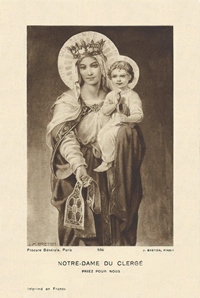
That said, we cannot go wrong with contemplation of the Holy Face of the Lord, held up before us sometimes as a portrait, sometimes as a lens, sometimes as a mirror.

In our 1980’s seminary we were inflicted with the deadly musings of Edward Schillebeeckx in his then-recent The Church With a Human Face: A New and Expanded Theology of Ministry.  The heretic priest – he eventually quit – who taught the course which was supposed to be on Holy Orders and Eucharist (but was instead about “ministry and symbol”) used this trash.  While most of us seminarians… well, some… yearned for a formation about a Church resplendent with the face of Christ for her people, we were being told to obscure, nay rather, efface that transcendent face with the merely earthly.

There’s nothing wrong with stressing the real needs of breathing and living human beings in the Church and the care she has for them.  That’s not what this seminary agenda was about.  It was a total, systematic disfigurement of the Church’s teaching on the priesthood and Eucharist.  We could say it was a radical “defacing”.   À la Rahner, sacraments only celebrate pre-existing realities.  There’s no “transubstantiation”.  When an “ordained minister” says the words of “institution” (not consecration) bread and wine become a symbol of the unity of the community gathered in that place at that moment.  À la Schillebeeckx, priests – sorry, scratch that, ministers are called forth from the community. When the community’s “face” changes, they fade back into the community for another to emerge.

My apologies. We were instructed back then not to use the “p-word”, and instead refer to ordained and non-ordained ministers.  We are all ministers, you see.

And now we are all “walking together”.  See how this progresses?

Sadly, as these heretics in the seminary crucified Christ daily in the classroom and in the chapel and in their very quarters, I often had in mind the passage in Isaiah 52:

“His appearance was so marred, beyond human semblance, and his form beyond that of the sons of men”.

This, dear reader, is the pattern we see again and again in the Church.  If Christ suffered His defacing, so must Holy Mother Church and, with Christ, many of her priests.

It isn’t a coincidence that, today, priests of a certain type are being de-faced, cancelled.

We need now to have before our eyes even painful images of the Holy Face of Christ, not only in our both beautiful and battered neighbor, but especially in the Church in the world.

Perhaps the Gospel for this Sunday can help us face up to this need.

Today’s Gospel comes from Matthew 22, which describes the Lord’s final days in Jerusalem.  The previous chapter saw His triumphant Palm Sunday entrance.  Holy Week follows, during which hostility from the high and mighty mounted and mounted against our Lord.

At this point in Matthew, we’ve just heard the parable of the Wedding Banquet, which Holy Church presented during Mass a few weeks ago.  Hard on the heels of that eschatological lesson, a group of Pharisees and Herodians oiled their way up to Jesus with flattering words to lay a trap for Him.  They asked, “Is it lawful to pay taxes to Caesar, or not?” (v. 17).  Keep in mind that at his “trial” a few days later Christ would be falsely accused of forbidding people from paying the tribute (Luke 21:2).

It is helpful to know that, in those times, the Jews had to pay two tributes, or taxes, one to the Romans and another to the Temple.  Taxation, tribute, was a sensitive issue.  Should the Lord have responded affirmatively, the Jews could have seen Him as a Roman collaborator, much as they would the hated Jewish tax collectors.  Had he answered in the negative, they could have accused him of sowing sedition against Rome.  Either way, a “yes” or a “no”, meant trouble.  Christ saw past their unctuous flattery and knew their wicked motive for asking.  He requested to see the “nomisma tou kensou”, the tribute coin, a denarius, the famous standard “day wage”, sometimes translated as “a penny” as in the KJV.  There’s been some inflation since the KJV.

The Lord counters the question with a question of His own (vv. 20-22).

Jesus said to them, “Whose likeness and inscription is this?” They said, “Caesar’s.” Then he said to them, “Render therefore to Caesar the things that are Caesar’s, and to God the things that are God’s.”  When they heard it, they marveled; and they left him and went away.

Again, context helps us to break open this nourishing bread of the Word.  The Gospel says Christ underscored not only the image on the coin, but the inscription.  His enemies responded “Caesar’s” and not some other great figure whose coins were in circulation.  It is most likely that the coin in question was a silver denarius of the adoptive son of Augustus, the Emperor Tiberius (+AD 37), which bore the image of Tiberius on the obverse with the inscription “Ti[berivs] Caesar Divi Avg[vsti] F[ilivs] Avgvstvs … “Caesar Augustus Tiberius, son of the Divine Augustus”.  In essence, “Tiberius, son of god”, for Augustus had been declared to be “divine”, like his adoptive father Julius before him.

It was a faceoff between the Son of God and the son of god, the ultimate worldly glorification of a mere mortal and the acknowledgement of the one true and living God.

Christ asked the Pharisees, “Whose likeness… is this?”  In the Greek he asks about the eikon which gives us the English “icon”.  Our Biblically oriented minds direct us back to the ancient Greek of the Old Testament, the Septuagint, and Genesis 1:27 where the same word eikon describes the creation of man in God’s image.

Putting aside controversy over Christian cooperation with or resistance to secular authority, “the state”, which over the centuries has been rooted in part in this encounter of Christ and the Pharisees, we are presented with what Paul later frames in terms of putting off the earthly man and putting on Christ, in whose image we are.  The more we are like Him in word and deed and inner orientation, the more we are good images of Him.

St. Ambrose of Milan (+397) wrote in his Commentary on Luke (9.34):

“Questioned concerning the penny, [Christ] asks about the image, for there is one image of God, another image of the world.  Therefore, the Apostle, also, admonishes us, ‘As we have borne the image of the earthly, let us bear also the image of the heavenly.’  Christ does not have the image of Caesar, because He is the image of God.”

In other words, the coin and its image of the Emperor with the false “son of god” stands for the world and its allurements.  We must detach ourselves from that image to see after the truer image.  In De officiis, the great Bishop of Milan says of the incident of the coin:

“You are laying aside the image of the eternal Emperor and setting up within yourself the image of death. Instead, cast out the image of the devil from the kingdom of your soul, and raise up the image of Christ.  This is the image that should shine in you, that should be resplendent in your kingdom, or your soul, the one which effaces all the images of evil vices.”

The Second Vatican Council’s document Gaudium et spes is not without its puzzles and its legitimate critics.  However, in the Christological section 22, we find, and please have patience with the extended quote:

The truth is that only in the mystery of the incarnate Word does the mystery of man take on light. For Adam, the first man, was a figure of Him Who was to come, namely Christ the Lord. Christ, the final Adam, by the revelation of the mystery of the Father and His love, fully reveals man to man himself and makes his supreme calling clear. …

He Who is “the image of the invisible God” (Col. 1:15), is Himself the perfect man. To the sons of Adam He restores the divine likeness which had been disfigured from the first sin onward. …

As an innocent lamb He merited for us life by the free shedding of His own blood. In Him God reconciled us to Himself and among ourselves; from bondage to the devil and sin He delivered us, so that each one of us can say with the Apostle: The Son of God “loved me and gave Himself up for me” (Gal. 2:20). By suffering for us He not only provided us with an example for our imitation, He blazed a trail, and if we follow it, life and death are made holy and take on a new meaning.

Christ, in whose image we are made, reveals man more fully to himself.  By gazing at Christ, risen and glorious, battered and defaced beyond recognition of man, we find ourselves revealed.

Jesus paid the tax for our sins with the coin of His face.

Shall we, in this time of dreadful and anxious need for our clearly struggling Church, turn away our faces?   We must look our challenges square in the face, remembering that concealed within them are the perennial enemies of our soul: the world, the flesh and the Devil.

Now is the time to pay tribute to the King, whom a week ago we celebrated as such in our traditionally oriented churches and chapels.

If not in churches, if it gets to that point, then on rocks in the forest and in people’s homes.

Posted in Linking Back, Liturgy Science Theatre 3000 | 3 Comments

Rome 24/10 – Day 18: Fabrics and finger food

07:24 was the time of sun rise.

18:26 will be the time of sunset

18:45 should be the time of the Ave Maria bell.

It is the feast of St. Luke, Patron Saint of Artists.

There are 75 days left in the year and the moon is full.  We can’t see it, but it’s there.

Not sure about that.

I spotted that on my way to Gammarelli to meet a priest friend who was settling on fabrics and designs for vestments for his parish.   They should be really interesting and attractive.

However, last year I saw a white and silver vestment that has had my attention ever since.  I had the guys get out the fabrics.   Grey shantung lining… or perhaps simple grey cotton.

Dunno.   I have a couple of nice white, but nothing whatsoever like this.

What’s my friend working on?  Something “gothic” and in an English style, which often involves sharply contrasting colours.  (See what I did there?)

I think the black “dadi” work better.  But the blue in the photo below is truer to life and the red in the photo above is truer.

And here is the “form” they used to use to make zucchetto’s for Benedict XVI.

Also spotted a quite “Roman” chalice in a classic design but with modern and mostly non precious materials.  The base is solid.  I think it must be chrome plated brass, because of the weight.  I’m good in this department for sure.

With a friend for cocktails before supper.  Which drink is mine?

Out for Japanese with two distinguished Catholic writers whom you would instantly know.

The sushi was pretty good, though its construction was a little loose.

It’s good to change up your pallet once in a while.

Please remember me when shopping online and use my affiliate links.  US HERE – UK HERE  WHY?  This helps to pay for health insurance (massively hiked for this new year of surprises), utilities, groceries, etc..  At no extra cost, you provide help for which I am grateful.

In churchy news… I read that the body of participants at “walking together about walking togetherity” strongly pushed back against giving bishops conferences doctrinal autonomy. Can you imagine what a galactically stupid move that would be?

Speaking of Catholic hardware…

Great pic of a great Cardinal…

In chessy news… HERE

(White to mate in 3)

Posted in SESSIUNCULA | 1 Comment

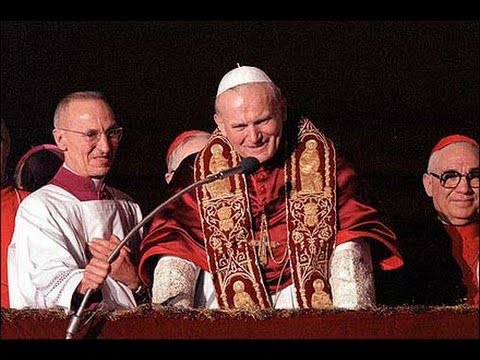
17 Oct 1978: Pope John Paul II

YouTube thumbnailYouTube icon

Posted in Saints: Stories & Symbols | Tagged | 4 Comments

This has the earmarks of the beginning of a great SCI-FI piece…

This has the earmarks of the beginning of a great SCI-FI piece…

Posted in Just Too Cool, Look! Up in the sky! | Tagged | 2 Comments

Rome 24/10 – Day 17: Ups and downs… mainly downs

Welcome registrant:

Cariad

I’m down today.  The realtor  who was going to show me an apartment this morning called to say that there was already an offer on it.  She’ll look more. If the other thing falls through, I’ll be able to look at it.

I’m disappointed.  I am reminded of the 9th Beatitude, the one Matthew forget to include,

Beati qui non expectant, quia non disappointabuntur.

I’ve been looking at renting.  Buying has more possibilities.  Anyone have a €1.5 million to spare?

I’m down, but not out.

And I’m in Rome!

Thank you, Lord, for this day.

Angelico Press is wonderful. I note with interest that they have republished the classic by Abbot Anscar Vonier A Key To the Doctrine Of The Eucharist.

US HERE – UK HERE

This book was very important in my formation during my conversion.

Please remember me when shopping online and use my affiliate links.  US HERE – UK HERE  WHY?  This helps to pay for health insurance (massively hiked for this new year of surprises), utilities, groceries, etc..  At no extra cost, you provide help for which I am grateful.

Eleanor Parker is a fine medievalist. She uses the moniker “Clerk of Oxford”. Today she posted this fascinating tidbit.

In churchy news… heh heh heh… via the … heh heh… Fishwrap (aka National Sodomitic Reporter)

I’ll bet it irked them to post that.

The Archbishop of Toulouse in France is countering the upcoming “Hellfest” with ghastly satanic crap planned for the city. HERE I don’t want to post the pictures. The Holy See could learn something from the Archbishop of Toulouse about idolatry.

The great Card. Zen has something to say about “walking together about walking togetherity”.

In chessy news…. new DRAMa! HERE

White to play! (How long did it take you?)

Posted in SESSIUNCULA | 14 Comments

Rome 24/10 – Day 16: “Sit back and I will tell you a story,…”

At 7:22 the sun rose for Rome behind a bit of increasing cloud cover.

It will, without us seeing it clearly, set at 18:29, on this 290th day of the civil year.

HEY!  e*********@orangemail.es  – my thank you note was kicked back!

HEY! a******20210@hotmail.com – my note kicked back!  

New email?

Welcome new registrant:

kneel


It is the Feast of St. Hedwig.  She died on 15 Oct of 1243, but when St. Teresa of Avila came along Hedwig was bumped a day.

The Ave Maria is in the 18:45 cycle.

Thank you, Lord, for this day.

Thank you in advance for a favor which perhaps will soon be granted.

Sit back and I will tell you a story, of patens and tombs and apartments.

Today I went over to the shop where my chalice and paten were made in 1991 and where they were regilded last year.  I was unhappy with the way the paten turned out – true flaws of workmanship which I pointed out.  I brought it back to Rome to have them re-do it. On the way, I stopped at the tiny neighborhood realty office run by a venerable woman in her 80’s. They are not always open and I was hopeful when I saw the iron serranda was up. No one was there. Lights out. But the serranda was up! Hope sprang up.

You see, for the last couple of trips I’ve been really frustrated in my search for a place in the right area, for the right price. I contact the contact and … crickets. So, my veg stand gal in the Campo gave me this senior lady’s number in the diminutive realty office past which I have walked about 17 thousand times. She’s very nice. But she wasn’t there.

I continued to the workshop where I had a frank conversation with the owner’s colleague in which I brooked no but’s or maybe’s.

Then it was directly to the nearby Chiesa Nuova for a visit to St. Philip Neri for a frank, but filially polite, conversation with him. 

St. Philip’s tomb is in the back on the left (Gospel side).

I knelt down at St. Philip’s tomb and, instead of praying for everyone else this time, I essentially said,

“Okay, St Pippo. You’re my guy. I was ordained on your feast. Now I’m a confrere – the first priest inducted as a member in who knows how long – in the Archconfraternity you founded at your church. I’m asking you, please, help me with this apartment thing. I’ve got to make some progress.”

I went on my way, leaving the church, stopping for some groceries, returning home the way I had started out… past the realty office.

The serranda was up and the door was open and the lights were on.  In I went.

After getting reacquainted she asked my maximum price per month and I told her.  Instantly she said “I have a place, it’s (€100 more).  It’s fantastic, newly redone, part of a religious house near here” (which puts it in my target zone).

It is on the 3rd floor with no elevator, which is going to be a problem for people who want to visit – and for my poor knees which are not what they were.

That said, we have an actual appointment to look at it tomorrow morning at 10:30.  It’ll be the first time in trying and trying and trying actually to get in and see it.

What I am wondering is if this place isn’t part of the structure attached to San Girolamo which is where St. Philip founded the Oratory.  Wouldn’t that be something?

If I get this place…. I am going to have to lean on your goodness a little more… but the dividends will be extended.

Now, for a change in gears…

I really like this 5.

It’s the small things, sometimes.

I’m learning the ways of my phone’s camera (thanks DPM).  There is a depth of field issue, at least when it is dark.   So, there’s a lot of fuzzy in the more distant objects.  I wasn’t trying to be artistic.  I’ll review the settings.

The more they upgrade these things, the harder they are to use.

Please remember me when shopping online and use my affiliate links.  US HERE – UK HERE  WHY?  This helps to pay for health insurance (massively hiked for this new year of surprises), utilities, groceries, etc..  At no extra cost, you provide help for which I am grateful.

Meanwhile, in churchy news… I don’t have much. I’m trying to care, but….

There’s this from my text group.

Meanwhile, in chessy news… HERE

Posted in SESSIUNCULA | 1 Comment

THIS JUST IN: “Groundbreaking Survey of U.S. Catholics Reveals Path to Restoring Eucharistic Belief” …. ummm

I got an email from something called the Real Presence Coalition.   I tried the website, but the link didn’t work.  I have sympathy, but I don’t have more knowledge from their site.

The email, however, said that, using Pew surveys about Eucharistic faith among US Catholics (you will recall that it those results were not rosy) the RPC did their own survey to find out what might have caused the lack of faith in the Eucharist and what might be done to counteract the trend.

This is what I read.   Be prepared for a COMPLETE SHOCK THAT WILL SHOCK YOU.

The RPC survey revealed that the loss of faith in the Real Presence has been precipitated by a combination of factors, including

1) Receiving the Eucharist in the hand;
2) Scandal of offering the Eucharist to public sinners who reject Catholic teaching;
3) Lack of reverence on the part of both the laity and priests;
4) Lack of solid catechesis; and
5) Lost sense of the supernatural.

I KNOW, RIGHT?!? Who’d’a ever thought that something like Communion in the hand would do anything but nearly instantly destroy faith in the Eucharist and devotion and reverence before the Eucharist??!?

Mind, you I am not picking on the RPC. They are like the kid pointing at the Emperor.  Good for that kid!

They also posted – and this is great – what the respondents thought might help to promote faith and reverence for the Eucharist.

Again, prepare to be SHOCKED! SHOCKED!!

Survey respondents also offered a number of specific recommendations to U.S. bishops on how to restore belief in the Real Presence, including:

1) Encouraging the practice of receiving the Eucharist on the tongue while kneeling;
2) Catechizing the faithful;
3) Promoting greater reverence for the Eucharist;
3) Eliminating the use of Extraordinary Ministers;
4) Withholding the Eucharist from public sinners; and
5) Increasing Eucharistic events such as Adoration and Benedictions.

HA! Can you imagine actually telling people what the Church teaches and then – in their sight and as they watch – have the Church’s pastors and teachers behave as if they, too, believed it all?

Imagine for a second, trying “reverence”, as in Eucharistic devotions like EXPOSITION and BENEDICTION… sort of as if the Eucharist was something important!

Can you get your mind around how backwardist it all is?

Get rid of Communion in the hand?

Get rid of extraordinary ministers of Communion (the technical title)?

NOT giving the Eucharistic higgledy-piggledy to fierce promotors of the murder of babies?

Can you imagine… hang on… kneeling?

Nothing they have said is new, either about why faith in the Eucharist is a disaster or how it can be reversed. Nothing.

HOWEVER… they said it! Good for them.

We need more and more and more of this until things start the change. The demographic sinkhole is still expanding and taking swathes out of our ambient. We need some serious work. We need…

Tradition.

We need The Obvious™.

Also, GO TO CONFESSION.

That’s a good starting place. Let’s start with our own state of life and state of soul.

Posted in Our Catholic Identity, The Coming Storm, The Drill, The future and our choices | 16 Comments

St. Teresa of Avila Calendars, Chess, and You

Today is the Feast of St. Teresa of Avila (+4 Oct 1582).

A few weeks ago I posted – HERE – that recently the tomb of St. Teresa was opened for examination and her body was found to be incorrupt.

In 1582, the ancient Julian calendar (organized by, yes, Julius Caesar and still observed by many Orthodox Christians) officially was terminated on Thursday 4 October by the command of Gregory XIII (1572–1585, Ugo Boncompagni) via the papal bull Inter gravissimas.

At midnight of 3-4 October the calendar skipped automatically to a day named Friday 15 October.

The famed Jesuit mathematician Christopher Clavius (+1612) worked out the calculations for this change.  He chose October for the moment of the jump because it had the fewest feast days.

He also did his calculations without the use of the decimal point!

St. Teresa of Avila died on the very night on which His Holiness had commanded that the calendar shift from 4 October to 15 October, which is why her feast is celebrated on the 15th rather than the 3rd or 4th.

Moreover, St Teresa bumped St. Hedwig from the 15th to the 16th.  I’m sure St. Hedwig didn’t mind, given the circumstances.

St. Teresa is know, of course, for being a reformer of the Carmelites.   Perhaps it is even more important that she is the Patroness of Chess Players… oh yeah… and she’s a Doctor of the Church, which is why she is often depicted with the doctoral biretta.

This is from The Way of Perfection 16 by St. Teresa of Avila, Doctor of the Church and Patroness of Chess Players.


1.But you may be sure that anyone who cannot set out the pieces in a game of chess will never be able to play well, and, if he does not know how to give check, he will not be able to bring about a checkmate. Now you will reprove me for talking about games…[but] if we play it frequently, how quickly we shall give checkmate to this Divine King! He will not be able to move out of our check nor will He desire to do so.

It is the queen which gives the king most trouble in this game and all the other pieces support her. There is no queen who can beat this King as well as humility can; for humility brought Him down from Heaven into the Virgin’s womb and with humility we can draw Him into our souls by a single hair. Be sure that He will give most humility to him who has most already and least to him who has least. I cannot understand how humility exists, or can exist, without love, or love without humility, and it is impossible for these two virtues to exist save where there is great detachment from all created things…

This is an error which we all make: if a person gets so far as to spend a short time each day in thinking about his sins, as he is bound to do if he is a Christian in anything more than name, people at once call him a great contemplative; and then they expect him to have the rare virtues which a great contemplative is bound to possess; he may even think he has them himself, but he will be quite wrong. In his early stages he did not even know how to set out the chess-board, and thought that, in order to give checkmate, it would be enough to be able to recognize the pieces. But that is impossible, for this King does not allow Himself to be taken except by one who surrenders wholly to Him.”

1. Y no os parezca mucho todo esto, que voy entablando el juego, como dicen. Pedísteisme os dijese el principio de oración; yo, hijas, aunque no me llevó Dios por este principio, porque aún no le debo tener de estas virtudes, no sé otro. Pues creed que quien no sabe concertar las piezas en el juego de ajedrez, que sabrá mal jugar, y si no sabe dar jaque, no sabrá dar mate. Así me habéis de reprender porque hablo en cosa de juego, no le habiendo en esta casa ni habiéndole de haber. Aquí veréis la madre que os dio Dios, que hasta esta vanidad sabía; mas dicen que es lícito algunas veces. Y cuán lícito será para nosotras esta manera de jugar, y cuán presto, si mucho lo usamos, daremos mate a este Rey divino, que no se nos podrá ir de las manos ni querrá.

2. La dama es la que más guerra le puede hacer en este juego, y todas las otras piezas ayudan. No hay dama que así le haga rendir como la humildad. Esta le trajo del cielo en las entrañas de la Virgen, y con ella le traeremos nosotras de un cabello a nuestras almas. Y creed que quien más tuviere, más le tendrá, y quien menos, menos. Porque no puedo yo entender cómo haya ni pueda haber humildad sin amor, ni amor sin humildad, ni es posible estar estas dos virtudes sin gran desasimiento de todo lo criado….

4. Mas contemplación es otra cosa, hijas, que éste es el engaño que todos traemos, que en llegándose uno un rato cada día a pensar sus pecados (que) está obligado a ello si es cristiano de más que nombre), luego dicen es muy contemplativo, y luego le quieren con tan grandes virtudes como está obligado a tener el muy contemplativo, y aun él se quiere, mas yerra. En los principios no supo entablar el juego: pensó bastaba conocer las piezas para dar mate, y es imposible, que no se da este Rey sino a quien se le da del todo.


It is interesting that St. Teresa talks about the queen.  That is a piece with a truly fascinating history.

A chessy history book:

Birth of the Chess Queen: A History

US HERE – UK HERE

The author is a feminist, but the book is pretty good history.  It was really interesting.

Posted in Saints: Stories & Symbols, SESSIUNCULA | Tagged | 1 Comment

Rome 24/10 – Day 15: Anger and good food

At 7:21 the sun rose and it will set at 18:30.

The Ave Maria Bell, marking the end of the ecclesiastical work day, would ring at 18:45.

Thank you, Lord, for this day.

Since it is also the Ides of October, today in ancient Rome would have been their “Oktoberfest”… day of the October Horse.  More on that below.

Today is the Feast of the Patroness of Chess, St. Teresa of Avila, Doctor of the Church.

St. Teresa, pray for us.

St Teresa, a great many of us are fed up with the … shenanigans!

Pray for the Church’s pastors who are persecuting traditionally-minded women religious.  Intercede with God to blunt the mania of aimless process for the sake of process.  Ask God to curb, even with chastisement if necessary, the insanity of gender-bending sex confusion and the appalling acts that it involves.

Her relic at The Parish™ which The World’s Best Sacristan™ prepared for exposition at the altar for the Masses today.

Last night was the “cena di congedo” for my friends who returned to home after the celebration of their 50th anniversary.  La Signora desired some of my green risotto and I was happy to oblige, thus the swoop out of the side.   Proof that we do more than take photos of prepared plates.  We eat the food, too.

The light wasn’t the best, but I think you get the idea.    “Fiorentina”.

After, amaro (one I had not tried before) and ciambelline made in house.

I am spectacularly irritated at Acqua Nepi for bastardizing their label on their .65 l bottle. The nerve.

They went whoring after modern and zippy only to lose their class and identity. It’s good water but I want the company to suffer for this impudent and useless innovation. The other bottles have still a decent label but… what the fresh hell is going on?!? Are they – sorry – testing the waters?

The offending close-up.

They need to get some bad feedback. The last time they tried this crap, I called them up and gave them a piece of my mind and, as they told me then, they scrapped their update that excluded the motto.

It is not to be borne. One more change…. I shall write to them a serious nastygram.

What is the motto, you ask?

Nepe civitas, nobilis atque potens, in cuius fertilissimis agris balnea scaturiunt salutifera.

Can you imagine? They took off the best part, their motto ribbon and Latin phrase.

Please remember me when shopping online and use my affiliate links.  US HERE – UK HERE  WHY?  This helps to pay for health insurance (massively hiked for this new year of surprises), utilities, groceries, etc..  At no extra cost, you provide help for which I am grateful.

In churchy news… this.

I promised more about the October Horse and ancient Rome.

One of the annual rituals of ancient Rome was the rite of the October Horse.  On this day there was a race between two-horse chariots held in the Campus Martius (at that time open fields).  The right hand horse of the victorious pair would be sacrificed by the flamen (priest) of Mars on an altar there in the Campus Martius (Martius… Mars… right?).  After the sacrifice, people who lived in the Via Sacra neighborhood would fight the people who lived in the Suburra and Francis Ford Coppola for the horse’s head. If the Sacravienses won, would display it on the Regia (where the Roman kings had been). If the Suburrenses won, it was displayed at the Turris Mamilia (a long-gone tower in the rough and tumble Suburra low zone along the slopes of the Viminal and Esquiline Hills). Meanwhile, the horse’s cauda (both tail and genitals) would taken to the Regia to drip its blood on a the sacred hearth.  The Vestal Virgins got some of the blood for use at the Parilia festival on 21 April which was associated with the Birthday of Rome.

The Australian writer Colleen McCullough penned a series of books set in ancient Rome beginning with the rise of Gaius Marius in The First Man in Rome and going all the way through the time of Caesar into the whole Anthony and Cleopatra train wreck.  One of the books is The October Horse which concerns the assassination of Julius Caesar and the rise of Octavian.  The books are admirably well-researched for historical novels.  She explains where she takes any liberties and why.  They stick well to the history of the devolution of the Republic and give great explanations of the events, Roman law, religion, culture, the fierce politics and dynamics of families and tradition, the role of the military.

In the first volume, on Gaius Marius, she gets her feet wet. She hits her stride in The Grass Crown, about Lucius Cornelius Sulla.  Yes, there are objectionable passages, blahhhaity blah blaaaaah.  Skip them and don’t get worked up.  They are historical novels, but they have a great deal of just straight history in them.

We like straight.

In straight chessy news… HERE

(Black to move and straight away and straight mate in 3)

Posted in SESSIUNCULA | 3 Comments

Adoremus: 12 points of “anti-liturgical heresy” and their counters

With a biretta tip to Peter K for the link… o{]:¬)

At the liturgical review Adoremusthis…

The Voice of Tradition: Prosper Guéranger’s “Anti-Liturgical Heresy”

Never mind that an odd character appears every once in a while. Odd characters always appear once in a while (this time, some й for é).

What’s this about?

Guéranger summarized the errors which he and many future proponents of the Liturgical Movement sought to correct in popular approaches to the liturgy through what he called the “anti-liturgical heresy.

The development of the liturgy can be measured according to Guéranger’s description of this heresy as he found it in the early Church, the Protestant Revolution, and through the errors of the Jansenists and Gallicans of Guéranger’s own time, as well as the varied threads of this heresy which were woven into the Liturgical Movement in the 20th century. Guéranger divided the anti-liturgical heresy into 12 distinct criteria: (1) hatred of Tradition; (2) substitution of ecclesiastical formulae for readings exclusively from Scripture; (3) fabrication of innovative formulae; (4) antiquarianism; (5) demystification of the liturgy; (6) “pharisaical coldness”4 in liturgical prayer; (7) removal of all intermediaries (Marian devotion, communion of saints, etc.); (8) replacement of sacred languages with the vernacular; (9) simplification of rites and easing of religious duties; (10) rejection of papal authority; (11) laicization, denying the sacramental nature of the ministerial priesthood; and (12) confusion of the roles of priests and laity in liturgical reform.

Pow!

The article spins these out.   I recommend it.

As we move along in it…

From Guéranger’s negative criteria of the anti-liturgical heresy, Dom Alcuin Reid deduced positive principles which clarify and affirm liturgical tradition: “[corresponding to criteria 1 and 2] [to] protect the place of non-scriptural texts in the organic whole of the Liturgy; [3] innovate rarely and only where necessary; [4] reject antiquarianism out of respect for the living, developed Liturgy; [5] protect all that speaks of the supernatural and of mystery in the Liturgy; [6] similarly, protect the nature of Liturgy as prayer and worship lest it be reduced to a didactic exercise; [7] treasure the role of the Blessed Virgin and of the saints in the Liturgy; [8] reject vernacularism; [9] resist the temptation to sacrifice the Liturgy for the sake of speed; [10] rejoice in liturgical unity with the Church of Rome; and, [11 and 12] to respect the particular liturgical roles and authority of the ordained.”

We are our rites.

Posted in Hard-Identity Catholicism, Liturgy Science Theatre 3000, The Drill, The future and our choices | Tagged , | 6 Comments