ROME 25/5– Day 32: The Ave Maria Bell Explained and “If you are a woke Catholic, you aren’t Catholic anymore.”

When the sun rose on this lovely Roman morning it was 5:51. The lovely Roman evening commences with the setting of the sun at 20:23.

The Ave Maria Bell should ring at 20:45.

It is the Feast of Sts. Nereus, Achilleus and Pancratius (304).

As it does inevitably happen the question came in: “What is the Ave Maria Bell you keep mentioning?”    I wrote about that in greater detail HERE.

Here’s a compressed version.

The Ave Maria Bells signals the end of the “religious” day and the beginning of “religious” night.

It is rung in the ball park of 30 minutes after sunset.  Usually the Ave Maria is rung in a way not dissimilar to how the Angelus (Regina Caeli now) is rung…  3x… 4x…5x… 1x.

If the Ave Maria rings at, say, 19:00h (7PM), then 18:00h (6PM) would start the 23rd hour of the day and 19:00 would start the 1st hour of the new day’s “evening and morning”.   In Roman churches, Vespers were usually sung about an hour before the Ave Maria Bell.  Hence, in the example above, at about 18:00 at the 23rd hour.

What was the Ave Maria Bell doing for the Roman Curia?

In the Roman Curia, Cardinals who were Prefects (the offices of the Congregations had/have throne rooms, btw) and other “pezzi grossi” around the place would receive visits for an hour after the Ave Maria. An hour after the Ave Maria was rung to signal the change of religious days, another bell was struck to denote the 1st hour of the new day.

The Ave Maria could also follow the sun, and ring precisely one half hour after sunset.   So, following the sun strictly, the solar Ave Maria this evening would ring at 18:53.

To simplify this for the Curia – ’cause who had watches, right? – they adopted 15 minute cycles.  We are in the 18:45 cycle now.  Actually we are in the 17:45 cycle, which lasts from 11-24 May.  BUT… there’s the “ora legale” here, the European “daylight savings” in force which moved the hour hand forward.   On Sunday 26 October “ora legale” is over and we will turn our clocks back to normal.

This also ties into the old Six Hour Clocks, you can still see around Rome.  The Six Hour Clock, which divided the day in 4 parts and made a complete revolution every 6 hours, influenced the recitation of the Angelus at 06:00 – 12:00 – 18:00.   These Six Hour Clocks were adjusted daily according to solar noon.   Solar noon was tracked carefully, because that is when contacts and appointments went into effect.  In the Church today, appointments still generally are designated as starting at noon.  There is a solar calendar made by a shaft of light through a tiny hole at the church of Santa Maria degli Angeli by the Piazza della Repubblica.   The light spot on the floor traces the sun’s analemma over the course of the year across a 45 meter long meridian line.  It also could track certain stars, such as Sirius, the Dog Star.  Clement XI (+1721) commissioned it to check the accuracy of the Gregorian Calendar (1582).  

That sun clock was used to determine solar noon for all of Rome.  A signal would be sent from that church by means of a flag, watched for across town from the Gianicolo Hill where a cannon fired to sound noon.  It still does, everyday!

BTW… John L. Heilbron has a book on churches and cathedrals as solar observatories.  It is called The Sun In The Church.   Very cool.

There’s this.
YouTube thumbnailYouTube icon

Today I left my glasses on my vestments in the sacristy.  The World’s Best Sacristan™ put them in church on a side ledge of the main altar so I could retrieve them “after hours”.

Tonight I was out with The Great Roman™ and the The Wife of the Great Roman™ (a distinguished and internationally known bio-ethicist) and the emeritus head of An Important Institute™ (whom you would instantly recognize).

… honestly, I feel like I’ve come alive again.

Before “certain changes” all I wanted to do was sleep or lock the door, the spiritual FUG was that bad.  Now, I’m getting out more and meeting up with people more… it’s like normal life is returning.  It’s a sign of how deeply some of us have been wounded now for years.

Anyway, I was out…  mussels, clams, tomato, hot pepper, yum.

On the way home.

Posted in SESSIUNCULA | 3 Comments

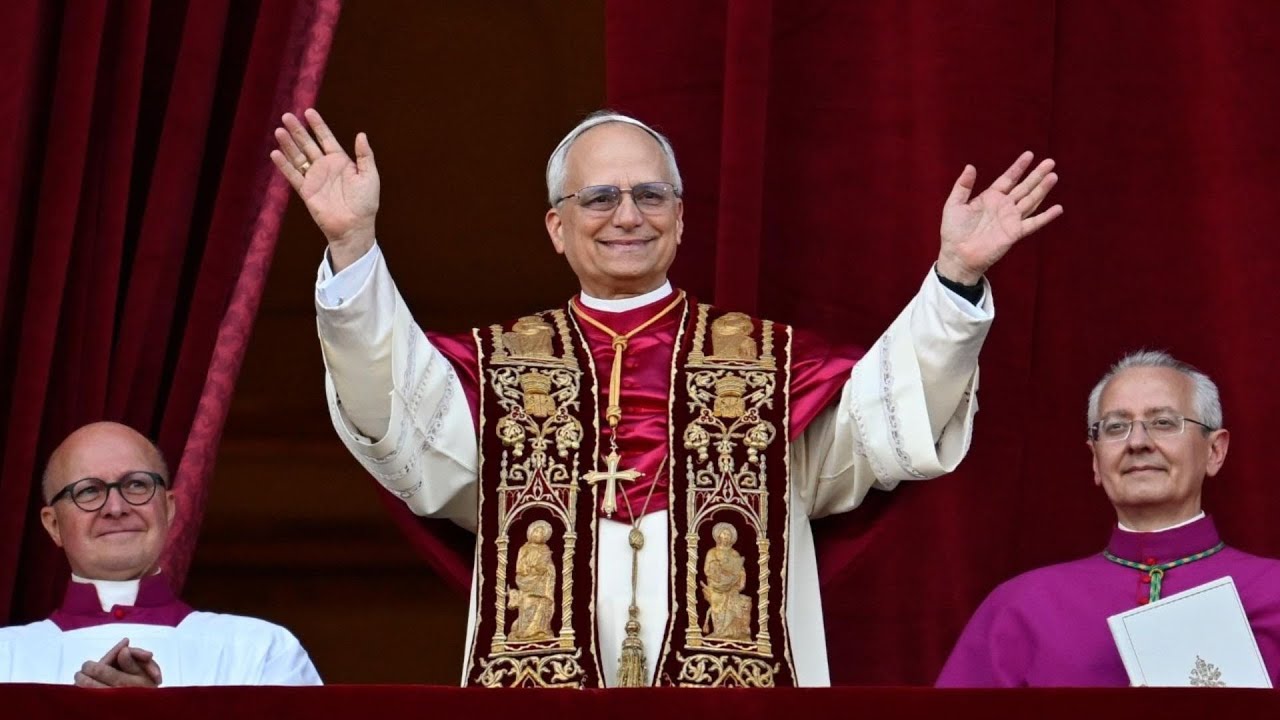
ASK FATHER: Did Leo XIV use an older, traditional form of the “Urbi et Orbi” Blessing?

From a priest…

QUAERITUR:

I have not had time, and will probably not any time soon to go back to footage of previous last handful of Roman Pontiff to confirm, but I heard that apparently Pope Leo XIV when he gave us first Papal blessing in Latin on this past Thursday from the balcony, the formula of blessing that he used was used for first time since Pope Pius XII. Is this correct? If so then it is a great sign and if Pope Benedict was only other one and (and even Pope St. John Paul II) then still a great sign. Thanks for your service to Church and know that you are in my prayers and please pray for me as well.

I, too, have not looked into this. However, I heard a couple of priests talking about whether or not the blessing included the misereatur etc.

I have no reason to believe that Popes used different formulas. And it looks like the same book in all the photos and videos.

Here is the text used by Pope Leo. CORRECTED

Sancti Apostoli Petrus et Paulus: de quorum potestate et auctoritate confidimus, ipsi intercedant pro nobis ad Dominum.
℟: Amen.
Precibus et meritis beatae Mariae semper Virginis, beati Michaelis Archangeli, beati Ioannis Baptistae et sanctorum Apostolorum Petri et Pauli et omnium Sanctorum, misereatur vestri omnipotens Deus; et dimissis omnibus peccatis vestris, perducat vos Iesus Christus ad vitam æternam. ℟: Amen.
Indulgentiam, absolutionem, et remissionem omnium peccatorum vestrorum, spatium veræ et fructuosæ pœnitentiæ, cor semper pænitens, et emendationem vitæ, gratiam et consolationem Sancti Spiritus; et finalem perseverantiam in bonis operibus tribuat vobis omnipotens et misericors Dominus.
℟: Amen.
Et benedictio Dei omnipotentis, Patris, et Filii, et Spiritus Sancti, descendat super vos et maneat semper.
℟: Amen.

English translation

May the Holy Apostles Peter and Paul, in whose power and authority we trust, intercede for us before the Lord.
℟: Amen.
Through the prayers and merits of Blessed Mary ever Virgin, Saint Michael the Archangel, Saint John the Baptist, the holy apostles Peter and Paul, and all the saints, may Almighty God have mercy on you and forgive all your sins, and may Jesus Christ bring you to everlasting life.
℟: Amen.
May the almighty and merciful Lord grant you indulgence, absolution and the remission of all your sins, a season of true and fruitful penance, a well-disposed heart, amendment of life, the grace and comfort of the Holy Spirit and final perseverance in good works.
℟: Amen.
And may the blessing of Almighty God, the Father, and the Son, and the Holy Spirit, come down on you and remain with you forever.
℟: Amen.

YouTube thumbnailYouTube icon

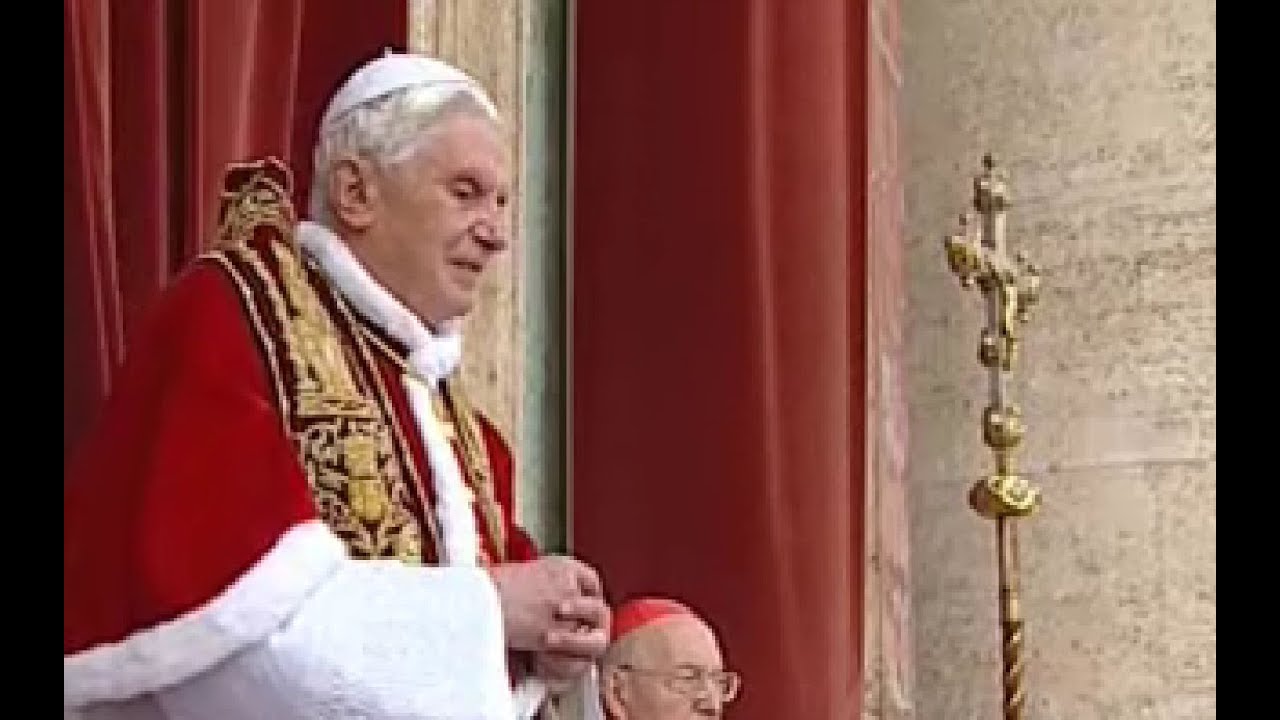
Benedict XVI giving the “Urbi et Orbi”

YouTube thumbnailYouTube icon

And here is an audio recording of John Paul I.

Posted in "How To..." - Practical Notes, ASK FATHER Question Box, Leo XIV, Liturgy Science Theatre 3000 | Tagged , | 11 Comments

ASK FATHER: If Father must say Mass AFTER the new Pope’s election is announced but BEFORE we know his name…?

From a reader…

QUAERITUR:

Our pastor had a rare situation with the election of the Pope. The white smoke went up, indicating that we had a new Pope, but before who the new Pope was announced, he had to go say Mass, thus not having a name for the Eucharistic prayer.

He handled it, but just curious if there is anything official that covers this unique situation.

Just when you think you’ve heard it all.

This is only possible in today’s world of instantaneous, real time information.  Right?

Back in the day, before everything was live on the little screen in your hand, this wouldn’t have been a problem.  Father would have simply said Mass as if it were still sede vacante … ’cause it was as far as he was concerned… and changed his way of saying the Canon when he finally got the news.

Hence, there isn’t anything “official” – that I know of – for this scenario.

Back in, say, the 16th century, some old guy in a village somewhere might be blithely saying Sixtus V in the Canon.  After a while he gets the news that Gregory XIV is Pope.  He changes from Sixtus to Gregory, not even knowing that between Sixtus and Gregory was Urban VII… for 12 days.

I can think of a couple solutions to this problem.

First, there is the idea of delaying Mass a little and wait for the news, though you never know how long it’ll take to get that announcement going.   And people have to get home and make supper for their children, etc.

Second, I would just say:

…  una cum fámulo tuo Papa nostro et Antístite nostro Uhtredo et ómnibus orthodóxis, atque cathólicæ et apostólicæ fídei cultóribus. …

… together with Thy servant our Pope, and our Bishop Uhtred, and all orthodox believers and professors of the Catholic and Apostolic Faith.

In that way you pray for the Pope, whose name you don’t know.

This might be a solution in the case of a genuine antipope!

Say that, in some scenario, there is doubt about a Pope’s resignation or there is a split in the College of Cardinals after the death or resignation of a Pope and the two differing groups of Cardinals stage their own conclaves, each producing a “Pope”.   All things being equal, one might be hard pressed to know what name to say in the Canon.  Therefore, just saying “for Your servant our Pope” without a specific name could work.

Posted in SESSIUNCULA | 5 Comments

ROME 25/5– Day 30-31:

Today, the 11th of the month saw the sunrise on the 3rd day of a new pontificate at 5:52.

It duly set at 20:22.

The Ave Maria Bell should ring at 20:45.   A new cycle as of today.

Welcome registrants:

christopherdwoodside@gmail.com
DocNino
LauraB3
Prof.Fred.Nazar
ScootiusMurus
TAL212716

Yesterday, 10 May, was the Feast of St. Job of the Old Testament and of St. John of God, Doctor of the Church.  Today, is the 3rd Sunday after Easter.  The Feast of Sant’Antimo.

Near my place.  Lovely scent of jasmine and cooking fills the street.

At The Parish™ we don’t waste candle stubs.

They go to the side altars.   Here’s what one of them was like when I finished today.

Beautiful light toward the end of an exquisite day.

Tired.


Posted in SESSIUNCULA | 3 Comments

Your Sunday Sermon Notes – 3rd Sunday after Easter 2025 (N.O. 4th Sunday of Easter)

Too many people today are without good, strong preaching, to the detriment of all. Share the good stuff.

It is the 4th Sunday of Easter in the Novus Ordo and the 3rd Sunday after Easter in the Vetus Ordo.   In the Novus Ordo this Sunday is “Good Shepherd Sunday”.  In the Vetus Ordo, Good Shepherd Sunday was last week.

Was there a GOOD point made in the sermon you heard at your Sunday Mass of obligation?

Tell about attendance especially for the Traditional Latin Mass.

Any local changes or (hopefully good) news?

I have a few thoughts about the orations in the Vetus Ordo for this Sunday: HERE

A taste:

[…]

“While” is complicated.  It can be a noun, as in an interval of time or, archaically, a particular occasion.  It is also used as a conjunction, “during the time that”, “as long as” and also “even though”.  “While” is also a preposition, “until”.  Moreover, “while” is a verb, “to pass time, especially in a pleasant way”.  As the Scarecrow sang, “I could while away the hours, conferrin’ with the flowers… if I only had brain.”  It might be interesting to apply some of this polyvalence to “Modicum, et iam non videbitis me: et iterum modicum, et videbitis me” (v. 16)  “A short while, and thenceforth you will not see me: and a while again, and you will see me”.

Shall we while while we are here for a while?  We are strangers and sojourners in this vale of tears.

[…]

Posted in Sermons, SESSIUNCULA | Tagged | 4 Comments

Leo XIV – relax

I think we can relax a little.  I think the Church’s “East Germany” is going to diminish.

My people, some know the new Pope, affirm that he prays and that he believes.

This counts for a lot.

I don’t want to give up personal information, but what I know and what I have understood in the last couple days, leads me to think that the Church is no longer going to be “East Germany”.

I post this knowing that when Bergoglio was elected (whom I know before) I truly tried hard to read him in continuity with his predecessors.  That didn’t happen.  I tried.  What Catholic would not try to give a new Pope some breathing room?

Pray for Leo XIV.

His schedule has been posted.  He will do all the big things of his pontificate rapidly, before I leave Rome.  Whew.

Can you imagine what the work load must be in these first days?

Pray for Leo XIV.

I want to write a Latin prayer for the beginning of this pontificate, but concepts are swirling.

Posted in Leo XIV | Tagged | 34 Comments

Some Notes about Leo XIV.. maybe more to follow

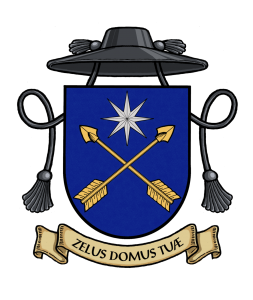
Let’s start with the important stuff, like the coat-of-arms and motto. ‘Cause I like that stuff.

Here is the coat-of-arms of Pope Leo XIV.   His motto is “In Illo Uno Unum”, which from the elegance you know is from St. Augustine.  Indeed it is, from en. ps. 127.  I’ll write separated about that.

The arms bear a Marian lily of purity and the symbol of the Augustinians, the arrow-pierced burning heart on the book, for Augustine is a Doctor of the Church.  It is simple.  That is good.

That Augustinian symbol is so familiar to me, since I studied in Rome at the Patristic Institute “Augustinianum” (while Prevost was there… and his classmate was president).

His name.  He told the cardinals that he wanted to affirm the path that the Church took with the Second Vatican Council, underscoring certain elements that both Benedict and Francis emphasized.  Hence he took the name Leo, calling to Leo XIII, and the social teaching of the Church.  Perhaps it is only coincidence that Leo XIII’s family had intimate dealings with Augustinians.

In that talk to Cardinals he mentioned AI.   This is a big deal.

His pectoral cross, at least what he has now, has relics of Augustinian saints, including Augustine and Monica.  I also have their relics in my chapel.  That will help me with a sense of solidarity, I hope.

The Pope will live in the Apostolic Palace.

Just watch.  Pretty Casa Santa Marta will return to being a “5 star hotel”.

Please, God, let the performative humility be at an end?

His theological background.

He has the coveted M.Div from the worst possible school in the worst possible years, Chicago Theological Union.

That doesn’t mean he is a heretic, like the instructors.  However it doesn’t point to a profound foundation.  It could be that he has done more on his own.  However, his jobs have kept him busy.

My sources say that he believes  and that he prays.

That’s a good start.


Posted in SESSIUNCULA | 12 Comments

ASK FATHER: Celebrating Our Lady of Fatima’s Mass (TLM) on 13 May

From a priest….

QUAERITUR:

I need an advice. I would like to say the Holy Mass on Tuesday in Vetus Ordo and I would like to use the texts from the Our Lady of Fatima feast (optional commemoration in Novus Ordo).

Can I do it?
Are there any special propria for this feast in Vetus Ordo somewhere?
Or should I use a votive Mass from Our Lady?
What about the feast of Robert Bellarmine? Can I just commemorate him in the Mass?

Sort of. Yes. Yes. Yes.

Yes, you can do it, but the second question applies.

As we all remember 13 May is the anniversary of Our Lady’s appearance Fatima, Portugal.  Hence 13 May was designated for the event.  However it is also in the traditional calendar (not the Novus Ordo) the Feast of the great Doctor of the Church St. Robert Bellarmine. So, St. Robert usually gets all the liturgical love on 13 May with the TLM.

In 2017 the Pontifical Commission “Ecclesia Dei” granted to all priests of the Latin Rite (secular or religious) the possibility of celebrating on the 100th anniversary of the first apparition (13 May 2017) the Mass of Our Lady of Fatima as a Votive Mass of the II Class, using the exact same texts and prayers of the Votive Mass of the Immaculate Heart of the Blessed Virgin Mary.

The letter didn’t say anything about future instances of 13 May.  One might extrapolate from that that the grant applied to that single day, the 100th anniversary.  Or not….  After all… this is a Votive Mass in honor of the Mother of God in one of her most important apparitions we are talking about.  And honoring her doesn’t mean that we are slighting St. Robert Bellarmine.

Masses in honor of Our Lady of Fatima have long been celebrated in the Diocese of Leiria–Fátima where Fatima is located. The traditional propers for Our Lady of Fatima are those of the Feast of the Immaculate Heart of Mary on 22 August except for the following Collect, Secret, and Postcommunion orations:

COLLECT:

Peccatórum nostrórum, Dómine, multitúdine praevalénte, ad Beátae Mariae Virginis recúrrimus singuláre suffragium: ut, qui eiúsdem Cordis pietáte fovémur, tua misericórdia praeveniente, indulgéntiam delictórum consequámur. Per Dóminum nostrum Iesum Christum, Fílium tuum, …

SECRET:

Convérte, Dómine, quáesumus, nostras rebélles voluntátes et tríbue: ut, auxiliánte beatíssima Vírgine María, divina mysteria castis iucunditátibus celebrémus. Per Dóminum nostrum Iesum Christum …

POSTCOMMUNION:

Pórrige, quáesumus, Dómine, déxteram tuam pópulo deprecanti, et cui tríbuis supplicándi benígnus afféctum, intercedénte Vírgine María, praebe plácatus auxílium, ut cuncta mala declínet et ómnia bona apprehéndat. Per Dóminum nostrum Iesum Christum,…

If I used this form for Our Lady, I would commemorate St. Robert Bellarmine.

Posted in "How To..." - Practical Notes, ASK FATHER Question Box, Liturgy Science Theatre 3000, Our Solitary Boast | Tagged | 4 Comments

ASK FATHER: Father just said “I absolve you in the name of….”

From a reader…

QUAERITUR:

I’ve been in a conundrum after confession today. The priest, a very holy yet elderly one was the confessor. At the words of absolution he said “and I absolve you in the name of etc…” and not the full ” I absolve you of your sins in the name of etc …” Is my confession valid? I believe it really is due to his age, I’ve been going to daily mass and he sometimes celebrates and at one Mass he accidentally said the old form of consecration of the wine (it will be shed for you and for all, instead of, which will be poured out for you and for many) he normally doesn’t do that. Anyways, thanks for your help and God bless you.

God bless that priest for his long and many years of service to God’s people.  Think of the good he has done.   Now in his twilight he is drifting a little.  I get it.   But this is why we have books to follow.  No matter our age, we need to use our books because we can and do drift once in a while.

I am in my place in Rome and not back home… or is this home?  Anyway, I don’t have my library at hand.  However, I’ve written on similar questions.

The formula of absolution is, in its short form, “Ego te absolvo a peccatis tuis, in nomine Patris +, et Filii, et Spiritus Sancti… I absolve you from your sins in the name of the Father +, and of the Son and of the Holy Spirit.”

St. Thomas Aquinas argues (though his opinions are not the equivalent of the Church’s Magisterium – never forget that!) that “Ego te absolvo”  is the form of the sacrament (ST III, Q. 84, Art. 3).  If he is right, then that may suffice.  He’s probably 99.9% right.

The Catechism of the Council of Trent, reliable and definitely an expression of the Church’s Magisteriumand surely working from Aquinas has this:

Pastors should not neglect to explain the form of the Sacrament of Penance. A knowledge of it will excite the faithful to receive the grace of this Sacrament with the greatest possible devotion. Now the form is: I absolve thee, as may be inferred not only from the words, whatsoever you shall bind upon earth shall be bound also in heaven, but also from the teaching of Christ our Lord, handed down to us by the Apostles.


These days it seems that the minimum form in the Latin Church (the Eastern Churches have their own somewhat different practices) is “Ego te absolvo a peccatis tuis… I absolve you from your sins.”

Because I am an Unreconstructed Ossified Manualist, I consulted several manuals (e.g., Tanquerey, Prümmer, Sabetti Barrett).  They all come to the same basic conclusion.  “Absolvo te a peccatis tuis” is certainly valid, and “Absolvo te” is probably valid, but if possible the longer form should be repeated to be sure.

The point is that “I absolve”, the word itself, implies that a) a person is being freed and that b) he is being freed from something.  In this context the person is a penitent confessing sins.  So, the penitent is being absolved of sins.  That’s implicit in absolvo te.

Part of the problem with not using the proper form – aside from the arrogance of priests who screw around with the form of absolution purposely – is the regular use of the bare minimum.  That suggests that perhaps the rest is not so important.  Just because it isn’t the bare and essential part of the form, that doesn’t mean that it isn’t important.

If you confess to a priest who regularly does something dodgy with the form of absolution, I would politely bring it up.

In your case, this was probably just a slip.  I wouldn’t bring it up unless he does it more often.

People are within their rights to have the form of absolution spoken as it is in the book. Ask the priest to give you absolution with the proper form. Do not be nasty or aggressive about this.

Posted in "How To..." - Practical Notes, ASK FATHER Question Box, GO TO CONFESSION | Tagged , | 1 Comment

ASK FATHER: Priest cut me off while confessing my sins

From a reader…

QUAERITUR:

Long-time listener, first-time caller, as it were. I’ve followed your blog for years, and it has been a great source of knowledge and spiritual wisdom for me.

I went to confession today in a cathedral. As always, I kept it brief and succinct but this time, the priest cut me off after 30 seconds, as he was clearly on a schedule. As a result, I missed several sins out and was unable to confess them before absolution. My question is, if this is the case, does the absolution carry for all the sins I had to miss (mortal and/or venial) or should I find another priest and confess the sins I missed?

From the onset, thanks for that intro, which made me think of the late, great Rush Limbaugh and his “open line Fridays”.

You stated that “he was clearly on a schedule”.  I’ll make a guess that he had to say the upcoming Mass and time was getting short.

Sensible priests want to hear the confessions of as many penitents as reasonably possible.  Hence, perhaps he thought you were a “rambler”.   A lot of people, especially those who have not made a good examination of conscience before hand, can fall into rambling, a bit aimlessly.   A confessor ought to interrupt rambling and help the poor person out of their self-torture and get to the point, which is the point of relief, unburdening.   Another reason for rambling could be embarrassment.   It is best in the confessional just to SAY IT.

As for your situation, I don’t know if you were rambling or not.  Sometimes I think penitents aren’t aware that they are offering up all sorts of extraneous, needless information.   That examination of conscience I mentioned helps to prevent that.

Also, you can confess a LOT of sins in both kind and number in 30 seconds.  Sure, sometimes you need to explain something about circumstances, but that can be important and needed.  That said, most of the time, you don’t need to add circumstances.  Just say what sins you committed and how many times (or how often… to the best of your ability… again examination of conscience beforehand!!!).  It doesn’t have to take a long time.

Do you have to confess the things you didn’t get a change to say?

Technically, not really… all of your sins were forgiven with the absolution, not some of them.   This applies also to things you sincerely forget about and didn’t actually confess.   That said, if you remember something, sure, bring it up the next time you go to confession.  We should confess all the mortal sins of which we are aware or which we remember that are unconfessed later on.  “Father, the last time I went to confession, I forgot to confess…X”.  In your case, “Father, the last time I went to confession, the priest was pressed for time and I didn’t get to confess A, B and C, which I do now.”  Meanwhile, you sincerely intended to confess your sins and, when you received absolution all your sins were absolved, not some of them.

Posted in "How To..." - Practical Notes, ASK FATHER Question Box, GO TO CONFESSION | 7 Comments